
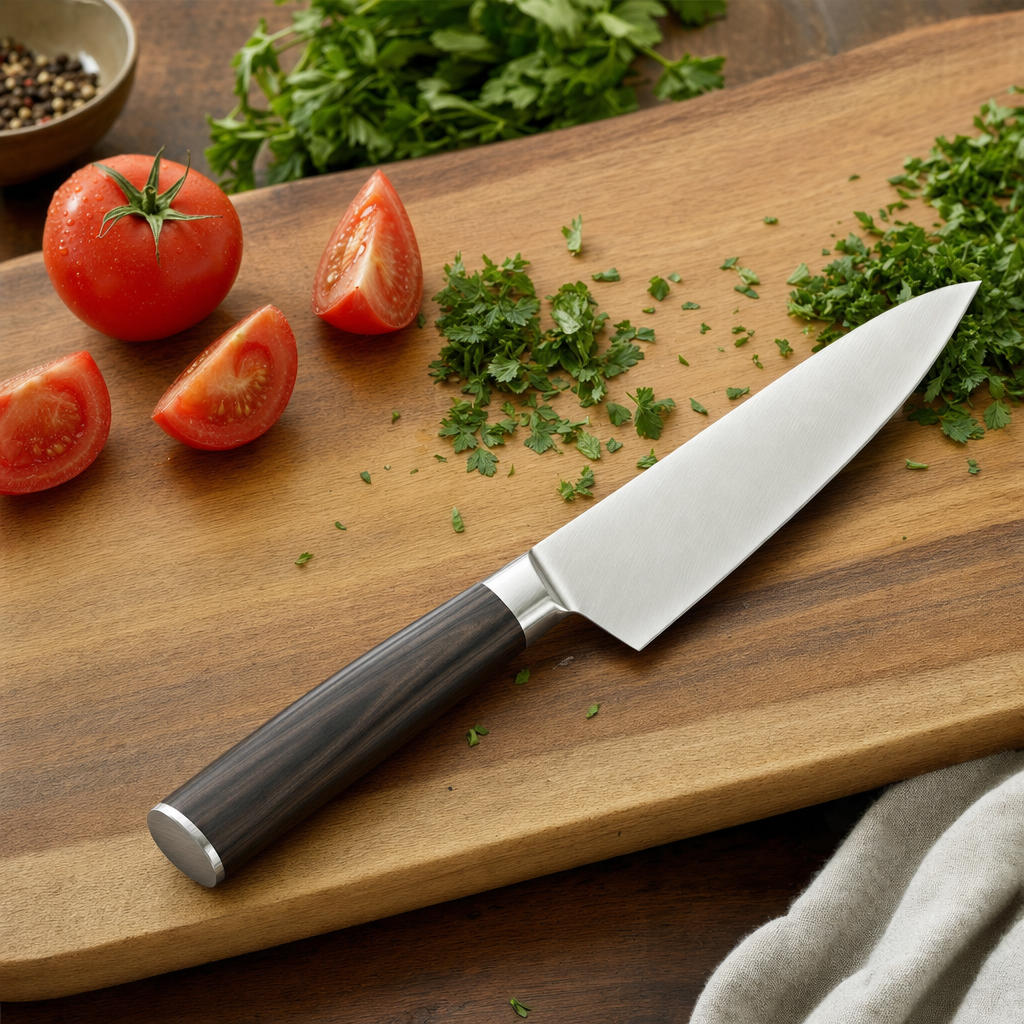
Understanding the Anatomy of a Chef Knife
When searching for the best chef knife, understanding the physical structure of the tool is the most logical starting point. A traditional chef knife is a versatile, multi-purpose instrument designed to handle a vast array of kitchen tasks, ranging from dicing onions and mincing herbs to slicing through denser root vegetables. The blade typically measures between eight and ten inches in length, featuring a curved edge that allows the cook to execute a rocking motion during prep work. This curved belly transitions up to a pointed tip, which is exceptionally useful for precision cutting, piercing, and detailed work where accuracy is paramount.
Beyond the blade itself, the heel is the thickest and heaviest part of the cutting edge, situated right near the handle, making it ideal for exerting downward pressure on tough ingredients like winter squash or raw carrots. The spine refers to the unsharpened top edge of the blade, which adds rigidity and stability to the overall construction. Many high-quality knives feature a full tang, meaning the metal of the blade extends completely through the interior of the handle. This design element ensures optimal balance, prevents the handle from snapping off under heavy stress, and provides a secure, reliable weight distribution in the hand of the user.
Comparing Western and Japanese Blade Philosophies
The global market offers numerous styles, but the discussion frequently centers on the contrast between traditional Western blades, such as German designs, and Eastern philosophies represented by Japanese cutlery. Western knives are traditionally forged from softer, heavier stainless steel alloys that prioritize durability and toughness over extreme edge retention. These blades are thicker, feature a more robust bolster, and are typically ground to a wider angle of roughly twenty degrees per side. This makes them remarkably forgiving when dropped or subjected to heavy impacts, appealing to cooks who prefer a heavier, more substantial tool in the kitchen.
Conversely, Japanese kitchen knives, often categorized as Gyuto models, are inspired by historical samurai sword-making traditions and focus on lightness, precision, and exceptionally sharp angles. Crafted from harder steels like VG-10 or SG2, these blades can be ground to a much steeper angle, usually around ten to fifteen degrees per side, resulting in a razor-sharp edge that glides effortlessly through delicate ingredients. However, this increased hardness also makes the metal more brittle and susceptible to chipping if it strikes bones or frozen foods, requiring a more mindful, refined cutting technique from the person using it during food preparation.
Material Choices: Steel Types and Handle Construction
The material composition of a blade dictates how long it will maintain its sharpness and how much maintenance it will require over its lifespan. Stainless steel is popular because it resists corrosion, rust, and staining, making it low-maintenance and ideal for busy home kitchens where utensils might occasionally sit unwashed for a short period. High-carbon steel, on the other hand, lacks chromium and will readily develop a patina and rust if exposed to moisture, yet culinary enthusiasts revere it for taking an incomparably sharp edge and being exceptionally easy to resharpen on a whetstone.
Handle materials are equally diverse, influencing both comfort and hygiene during prolonged cooking sessions. Traditional wooden handles offer a warm, natural grip that feels organic in the hand, though they often require periodic oiling to prevent drying out or cracking from water exposure. Modern composite materials, such as Pakkawood, resin-infused fibers, and textured plastics like G-10 or micarta, provide waterproof durability and a secure grip even when hands are wet or greasy. Ultimately, the best handle is one that feels balanced and ergonomically comfortable for your unique hand size and grip style.
Consider these essential factors when evaluating kitchen cutlery:
- Blade length matched to your cutting board and storage space
- Overall weight distribution and balance point near the bolster
- Handle ergonomics that prevent hand fatigue during long prep sessions
- Steel hardness rating that aligns with your willingness to sharpen frequently
Proper Handling, Maintenance, and Care Techniques
Owning a superior cutting tool requires adopting proper maintenance habits to preserve its performance and safety over many years of regular use. Dishwashers are universally recognized as the absolute enemy of quality cutlery; the harsh detergents, extreme heat, and violent tossing around can warp handles, dull edges instantly, and cause microscopic chips in the delicate steel. Instead, every blade should be washed immediately by hand using mild dish soap and warm water, then dried thoroughly with a soft towel before being placed back into a wooden block, magnetic strip, or protective sheath.
Maintaining a sharp edge involves two distinct processes: honing and sharpening. Honing steel should be used regularly to realign the microscopic teeth of the blade that bend slightly during everyday cutting tasks, restoring edge alignment without actually removing metal. Sharpening, which involves using a whetstone or professional sharpening service, physically grinds away worn metal to create a brand new edge. Doing this once or twice a year, depending on frequency of use, ensures the knife continues to slice ingredients cleanly rather than crushing them, which also significantly reduces the risk of slipping.
Frequently Asked Questions About Kitchen Knives
What size chef knife is best for everyday home cooking?
An eight-inch blade is considered the gold standard for most home cooks because it offers the ideal balance of maneuverability and cutting surface. However, cooks with smaller hands or limited counter space often find a six-inch model much more comfortable to control.
How often should a kitchen knife be sharpened?
For a home cook preparing meals several times a week, professional or whetstone sharpening is generally necessary one to two times per year. Honing with a steel rod should be done before or after every few uses to maintain alignment.
Is it worth investing in expensive forged knives?
Forged knives generally offer superior balance, durability, and edge retention compared to cheap stamped alternatives. For anyone who cooks regularly, a well-made knife is a lifelong investment that drastically improves kitchen efficiency.
Why do some kitchen knives rust despite being stainless steel?
Stainless steel is stain-resistant, not entirely stain-proof. Prolonged exposure to acidic foods, salts, moisture, and harsh dishwasher chemicals can break down the chromium oxide layer, leading to corrosion and pitting over time.
Article Was Generated By AI.