
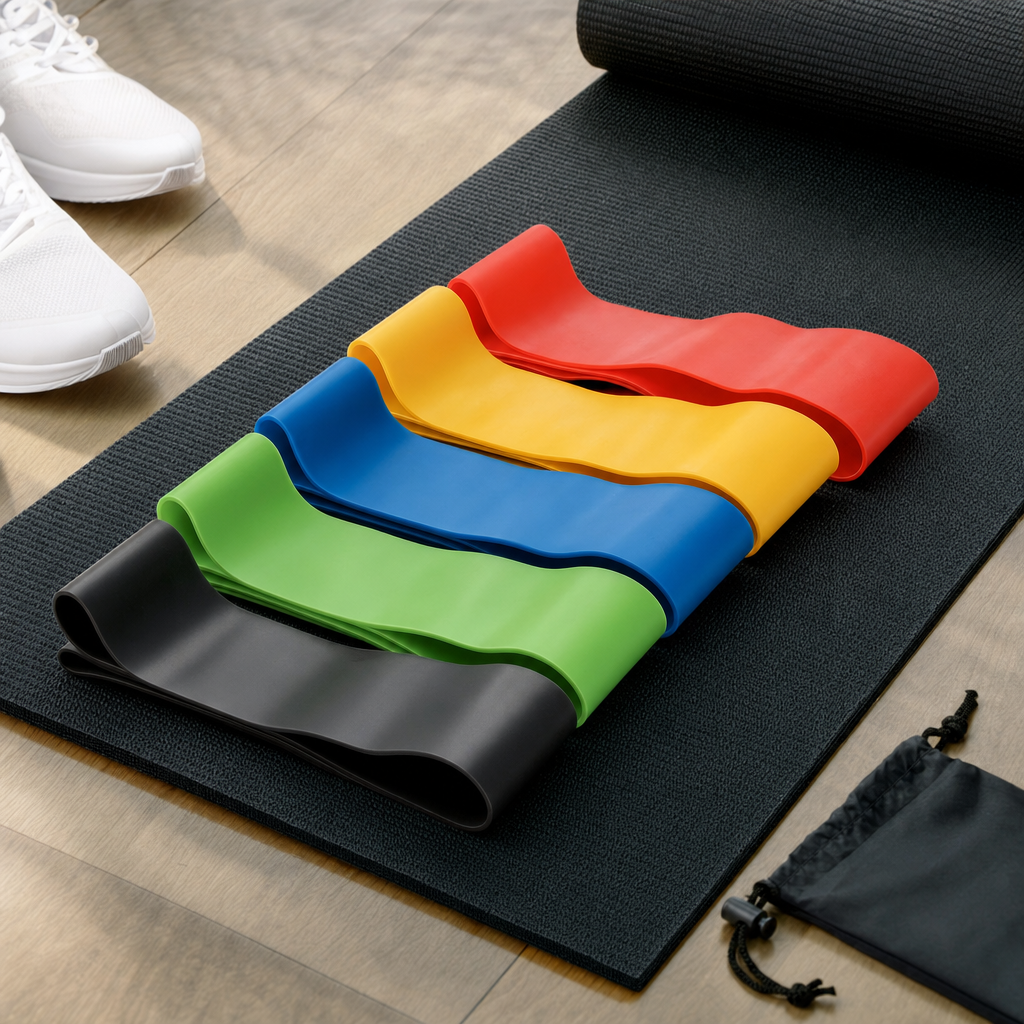
Understanding Resistance Bands and Their Benefits
Resistance bands have transformed modern fitness routines by offering a versatile, portable, and joint-friendly alternative to traditional free weights and bulky gym machines. When looking for the best resistance bands, you are essentially investing in a dynamic training tool that utilizes elastic tension rather than gravity to challenge your muscles. Unlike metal dumbbells, which provide constant resistance throughout a movement, bands create progressive tension. This means the resistance increases as the band stretches, perfectly matching the natural strength curve of human joints and muscles during exercises like bicep curls or squats.
Beyond versatility, these portable fitness tools are remarkably accessible for individuals at every stage of their physical journey, from complete beginners to advanced athletes. They take up virtually no space in a home, suitcase, or office, making it easier than ever to maintain a consistent workout schedule regardless of travel or busy lifestyles. Furthermore, because they rely on elastic resistance rather than heavy iron plates, they significantly reduce the impact on your connective tissues and joints, allowing for effective strength training with a much lower risk of accidental dropping injuries or acute joint strain.
Types of Resistance Bands Available on the Market
The fitness marketplace features several distinct styles of elastic exercisers, each engineered for specific movements, comfort levels, and training objectives. Tube bands with handles are perhaps the most recognizable style, frequently used for upper body isolation exercises such as shoulder presses, chest flies, and rows. They typically feature foam or plastic handles attached to the ends of rubber tubing, and some sets allow you to stack multiple tubes onto a single set of handles to increase the overall resistance level during your workout sessions.
Loop bands, often referred to as flat bands or mini bands, form a continuous circle of rubber or latex and are exceptionally popular for lower body conditioning. These bands are placed around the thighs, calves, or ankles to activate the glutes, hips, and stabilizing muscles during lateral walks, squats, and clam shells. Meanwhile, long power resistance bands are heavy-duty, continuous loops designed for intense applications like assisted pull-ups, powerlifting supplementation, and advanced mobility work, offering high levels of durability and maximum stretch capacity.
Key Factors to Consider When Evaluating Options
Material composition is one of the most critical factors when determining quality and safety, as most bands are constructed from either natural latex or thermoplastic elastomer. Natural latex generally offers superior elasticity, smoother resistance progression, and better long-term durability, though individuals with latex allergies must seek hypoallergenic alternatives made from rubber-free materials. Additionally, manufacturing methods matter immensely; dip-molded latex bands tend to resist snapping and wear much better than extruded or cheaply glued varieties, ensuring a safer and more reliable user experience over years of consistent stretching.
Resistance levels and color-coding systems also require careful attention, as every manufacturer uses their own proprietary scale for weight equivalents. While a yellow band might represent light resistance in one brand, it could signify medium or heavy resistance in another, meaning you should always check the exact poundage ranges rather than relying solely on color assumptions. Building a comprehensive set that spans from light to ultra-heavy ensures you have the right amount of tension for both delicate rehabilitation movements and powerful multi-joint compound exercises.
Practical Guidance for Safe and Effective Use
Proper maintenance and daily inspection routines are essential for prolonging the lifespan of your fitness equipment and preventing unexpected snaps during high-tension movements. Before every single workout, take a few moments to thoroughly examine your bands for tiny tears, surface cracks, ozone damage from sunlight, or small nicks caused by fingernails, rings, or rough anchor points. Storing your bands away from direct sunlight, extreme temperature fluctuations, and sharp metal objects will prevent premature rubber degradation and keep your equipment in pristine condition for years.
When anchoring bands for exercises like chest presses or rows, always use a dedicated door anchor or secure, smooth fixtures designed specifically for that purpose. Never loop a band around a sharp door handle, exposed nail, or rough wooden edge, as friction can rapidly shear the rubber and cause dangerous recoil. Furthermore, avoid over-stretching any band beyond its recommended maximum length—typically specified as no more than two and a half to three times its resting length—to maintain structural integrity and avoid snapping.
Frequently Asked Questions About Resistance Bands
Can resistance bands completely replace traditional free weights?
While resistance bands are exceptionally effective for building strength, improving mobility, and stimulating muscle growth, they provide variable resistance rather than constant gravitational load. Many fitness enthusiasts use them as a full replacement, while others combine both bands and free weights for optimal results.
How do I know which resistance level to start with?
Beginners should generally start with a light or medium resistance band that allows for 12 to 15 smooth repetitions with proper form. If the final few reps feel challenging but manageable without breaking your posture, the resistance level is appropriate for your current strength.
How can I prevent my resistance bands from rolling up during leg exercises?
Rolling is a common issue with flat loop bands during lower body movements. To minimize rolling, look for wider fabric resistance bands instead of thin rubber ones, and ensure your muscles remain engaged with outward tension throughout the entire movement.
What is the average lifespan of a quality resistance band?
A high-quality natural latex or fabric-encased resistance band typically lasts between one to three years with regular use. Lifespan depends heavily on frequency of use, storage conditions, exposure to direct sunlight, and whether proper anchoring techniques are consistently followed.
Article Was Generated By AI.