
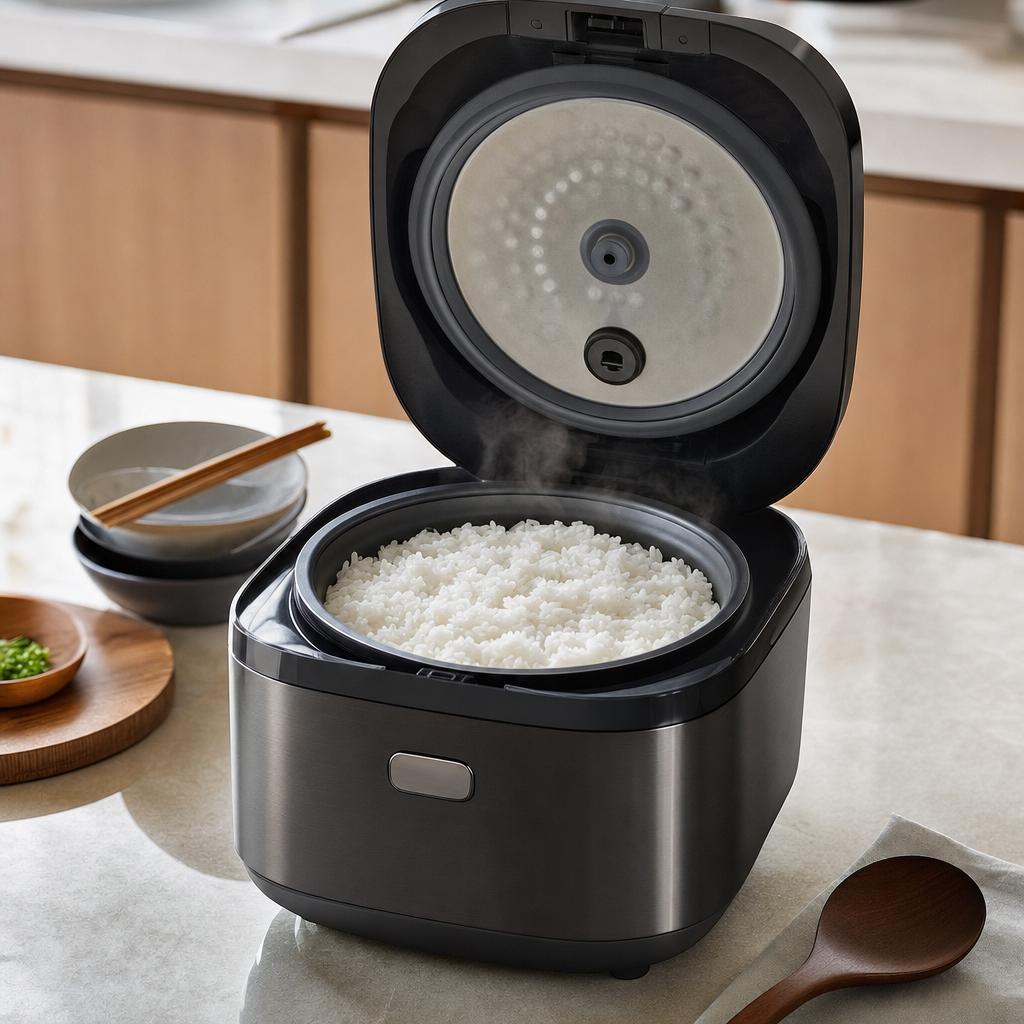
Understanding the Fundamentals of Modern Rice Cookers
The quest for the best rice cooker often begins with understanding how these kitchen appliances revolutionized home cooking across the globe. Traditional stovetop cooking requires constant attention to heat levels, water ratios, and timing to prevent scorching or undercooking. Modern electric appliances eliminate this guesswork by utilizing thermostatic controls that automatically regulate temperature and cooking time based on moisture absorption. When water is fully absorbed by the grains, the internal temperature rises beyond the boiling point of water, signaling the appliance to switch from active cooking to a warm-holding state.
Beyond basic white rice, contemporary models are engineered to handle a vast array of grains including brown rice, quinoa, jasmine, basmati, and even steel-cut oats. This versatility stems from specialized microprocessor programs tailored to the unique starch content and density of each grain type. By adjusting soaking times, heat curves, and steaming durations, these machines ensure that every batch achieves the ideal texture without requiring manual intervention. For households that regularly consume grains, investing in a reliable unit transforms a tedious culinary chore into a completely automated, set-it-and-forget-it experience.
Comparing Heating Technologies: Standard Thermal vs. Fuzzy Logic and Induction
When evaluating the best rice cooker options available on the market, you will encounter three primary heating technologies that dictate performance and price. Standard thermal-logic models use a simple bimetallic strip and a heating plate at the bottom of the unit. While affordable and durable, these basic machines apply uniform heat from below, which can occasionally result in unevenly cooked grains if the water-to-grain ratio is slightly off. They are best suited for casual cooks who primarily prepare standard white rice in modest quantities without needing advanced specialty settings.
At the intermediate level, fuzzy logic microcomputer cookers utilize artificial intelligence to make micro-adjustments to temperature and cooking duration throughout the cycle. These appliances can sense internal pot temperatures and ambient conditions, correcting minor measuring errors automatically. For premium performance, induction heating technology transforms the entire inner cooking bowl into a heat source using magnetic fields. This 360-degree heat distribution cooks every single grain uniformly, making induction units the gold standard for enthusiasts pursuing restaurant-quality texture.
Capacity Considerations and Household Size Guidelines
Choosing the right capacity is essential for ensuring your appliance meets your culinary needs without taking up unnecessary counter space. Manufacturers typically measure capacity in raw cups of rice, which nearly doubles in volume once cooked. A three-cup raw capacity model yields roughly six cups of cooked grains, making it an ideal choice for single individuals, couples, or small apartments where storage space is at a premium. Purchasing a unit that is too large for your household can result in poor cooking performance for small batches because the internal sensors may misread the heat requirements.
For larger families, entertaining enthusiasts, or meal-preppers who cook in bulk, five-cup to ten-cup models provide the necessary volume to prepare substantial meals in a single batch. It is important to note that many advanced multi-cookers require a minimum amount of ingredients to function correctly, meaning you cannot always cook a tiny half-cup portion in a massive ten-cup industrial-style machine. Assessing your typical weekly menu and portion sizes helps narrow down the choices to a unit that balances physical footprint with adequate cooking volume.
Key Features, Materials, and Maintenance Requirements
The inner cooking bowl is perhaps the most critical component influencing food safety, durability, and ease of cleaning. Most models feature aluminum or stainless steel bowls coated with non-stick surfaces to prevent cooked grains from adhering to the bottom. While non-stick surfaces make cleanup effortless, they require gentle care using non-metal utensils to avoid scratching the coating over time. Higher-end models often boast thick multi-layered ceramic, copper, or diamond-infused inner pans designed to optimize heat retention and withstand years of regular daily use.
Additional features such as detachable steam vents, retractable power cords, and delay timers add significant convenience to your cooking routine. A delay timer allows you to load your grains and water in the morning and program the appliance to finish cooking right as you walk through the door after work. Easy-to-read digital displays, audible alert signals, and specialized steam baskets for vegetables or dumplings further elevate the functionality of modern kitchen appliances, turning a single-task device into a versatile multi-functional cooking workstation.
Practical Guidance for Daily Use and Troubleshooting
Achieving perfect results consistently involves mastering a few fundamental preparation techniques that complement your appliance’s technology. Rinsing your rice thoroughly under cold water removes excess surface starch that can otherwise cause foaming, boiling over, or a gummy, overly sticky texture in the finished dish. Furthermore, utilizing the designated measuring cup included with your specific appliance is crucial, as manufacturer calibration relies on their exact volumetric measurements rather than standard baking cups.
Even with advanced appliances, occasional cooking hiccups can occur due to water-to-grain ratio discrepancies or altitude variations. If your grains turn out too firm, adding a tablespoon of water and running a short reheat cycle typically resolves the issue without ruining the batch. Conversely, overly mushy results usually indicate too much liquid or insufficient grain rinsing prior to starting the cycle. Keeping the inner lid gasket clean and free of starch buildup ensures proper pressure sealing and maintains optimal heat distribution over years of service.
Frequently Asked Questions
What is the main difference between fuzzy logic and standard rice cookers?
Fuzzy logic models use an internal computer chip to monitor and adjust temperature and cooking time dynamically throughout the cycle. Standard models use basic thermostats that simply turn off when water evaporates, offering less precision for specialty grains.
Can I cook other grains besides rice in these appliances?
Yes, many modern units feature dedicated settings for quinoa, oatmeal, barley, and mixed grains. Advanced models with multi-cook functions can even steam vegetables, bake small cakes, or slow-cook stews.
Why is rinsing rice recommended before cooking?
Rinsing washes away excess surface starch left over from the milling process. This prevents the grains from becoming gummy, reduces boiling-over issues, and yields a fluffier, more distinct texture.
How do I choose the correct capacity for my household?
Capacity is measured in raw cups of grains. A 3-cup model suits 1 to 2 people, a 5-cup model fits families of 3 to 4, and 8 to 10-cup models are ideal for large families and entertaining.
Article Was Generated By AI.